How Gamification Improves Student Engagement
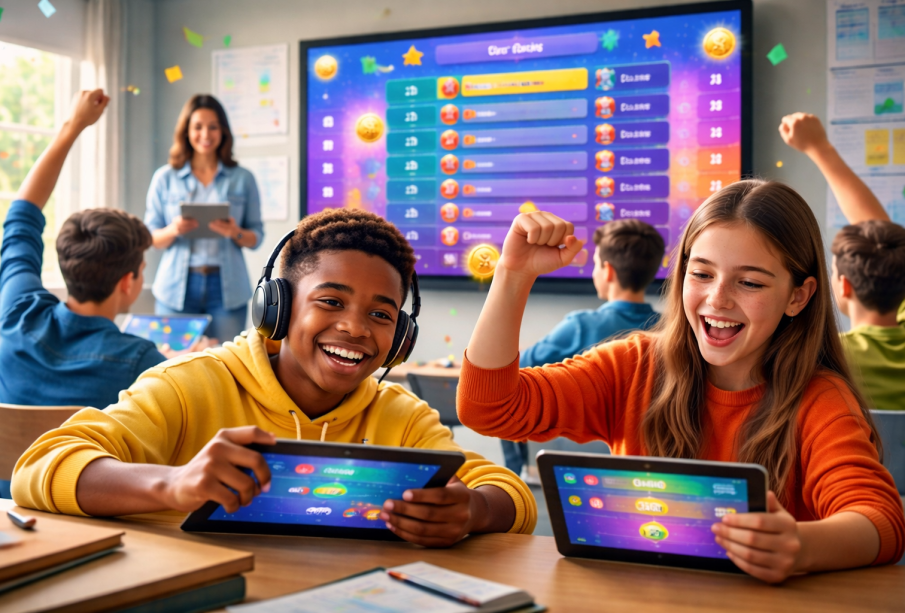
Keeping students engaged has always been a challenge in education. Traditional teaching methods often struggle to hold attention in an age filled with digital distractions. This is where gamification comes in—transforming learning into an interactive and motivating experience by applying game-like elements to educational settings.
What Is Gamification in Education?
Gamification involves integrating game mechanics such as points, rewards, levels, and challenges into learning activities. The goal is to make education more engaging without compromising academic value.
Common Gamification Elements
- Points and scoring systems
- Badges and achievements
- Leaderboards
- Levels and progress tracking
- Challenges and quests
These elements tap into students’ natural desire for competition, achievement, and recognition.
Why Student Engagement Matters
Engaged students are more likely to retain information, participate actively, and perform better academically. Lack of engagement, on the other hand, often leads to poor understanding and low motivation.
Gamification addresses this by turning passive learning into an active experience.
Boosts Motivation and Participation
One of the biggest benefits of gamification is its ability to increase motivation.
How It Works
- Rewards provide instant feedback and encouragement
- Progress systems create a sense of achievement
- Friendly competition pushes students to improve
When students feel rewarded for their efforts, they are more likely to stay involved.
Encourages Active Learning
Gamified environments require students to interact, think, and respond, rather than simply listen.
Examples
- Quizzes with real-time scoring
- Problem-solving challenges
- Interactive simulations
This hands-on approach enhances understanding and makes learning more memorable.
Builds Consistent Learning Habits
Gamification encourages students to return regularly and stay consistent.
Key Factors
- Daily or weekly challenges
- Streak rewards for continuous participation
- Gradual progression through levels
These elements help students develop discipline and a routine around learning.
Provides Instant Feedback
Immediate feedback is crucial for effective learning. Gamification delivers this in real time.
Benefits
- Students quickly understand mistakes
- Encourages self-correction
- Reinforces correct answers
This reduces frustration and helps learners improve faster.
Supports Personalized Learning
Not all students learn at the same pace. Gamification allows for adaptive learning experiences.
How It Helps
- Students can progress at their own speed
- Difficulty levels can adjust based on performance
- Individual achievements are recognized
This creates a more inclusive and effective learning environment.
Enhances Collaboration and Social Interaction
Gamification is not only about competition—it also fosters teamwork.
Collaborative Features
- Group challenges and missions
- Peer-to-peer learning activities
- Shared goals and rewards
These interactions improve communication skills and build a sense of community.
Makes Learning Enjoyable
Perhaps the most obvious benefit is that gamification makes learning fun.
When students enjoy the process, they are naturally more engaged and willing to invest time and effort. This positive association with learning can have long-term benefits.
Challenges of Gamification
While effective, gamification must be implemented thoughtfully.
Potential Issues
- Overemphasis on rewards instead of learning
- Excessive competition causing stress
- Poor design leading to distraction
Balancing entertainment with educational value is key to success.
Conclusion
Gamification is reshaping the way students interact with education. By combining learning with elements of play, it creates an environment where students are motivated, engaged, and eager to participate.
When used effectively, gamification not only improves academic performance but also fosters a lifelong interest in learning.
FAQs
1. Is gamification suitable for all age groups?
Yes, gamification can be adapted for different age groups, from young learners to adults.
2. Does gamification replace traditional teaching methods?
No, it complements traditional methods by making them more interactive and engaging.
3. Can gamification improve academic performance?
Yes, increased engagement and motivation often lead to better understanding and results.
4. What tools are commonly used for gamified learning?
Platforms like quiz apps, learning management systems, and educational games are widely used.
5. Is gamification only about digital tools?
No, it can also be applied through offline activities like classroom competitions and reward systems.
6. How do teachers measure success in gamification?
Through student participation, performance improvements, and feedback.
7. Can gamification reduce learning stress?
When designed well, it can make learning more enjoyable and reduce pressure by focusing on progress rather than perfection.